
India’s relationship with gold has always been emotional as much as financial. Most people still think of gold as jewellery, coins, or bars locked away in a bank locker.
But now, the National Stock Exchange (NSE) is trying to make gold investing more modern with something called Electronic Gold Receipts, or EGRs.
At first, the term sounds technical. But the idea of NSE’s electronic gold receipts is actually simple.
What Are Electronic Gold Receipts?
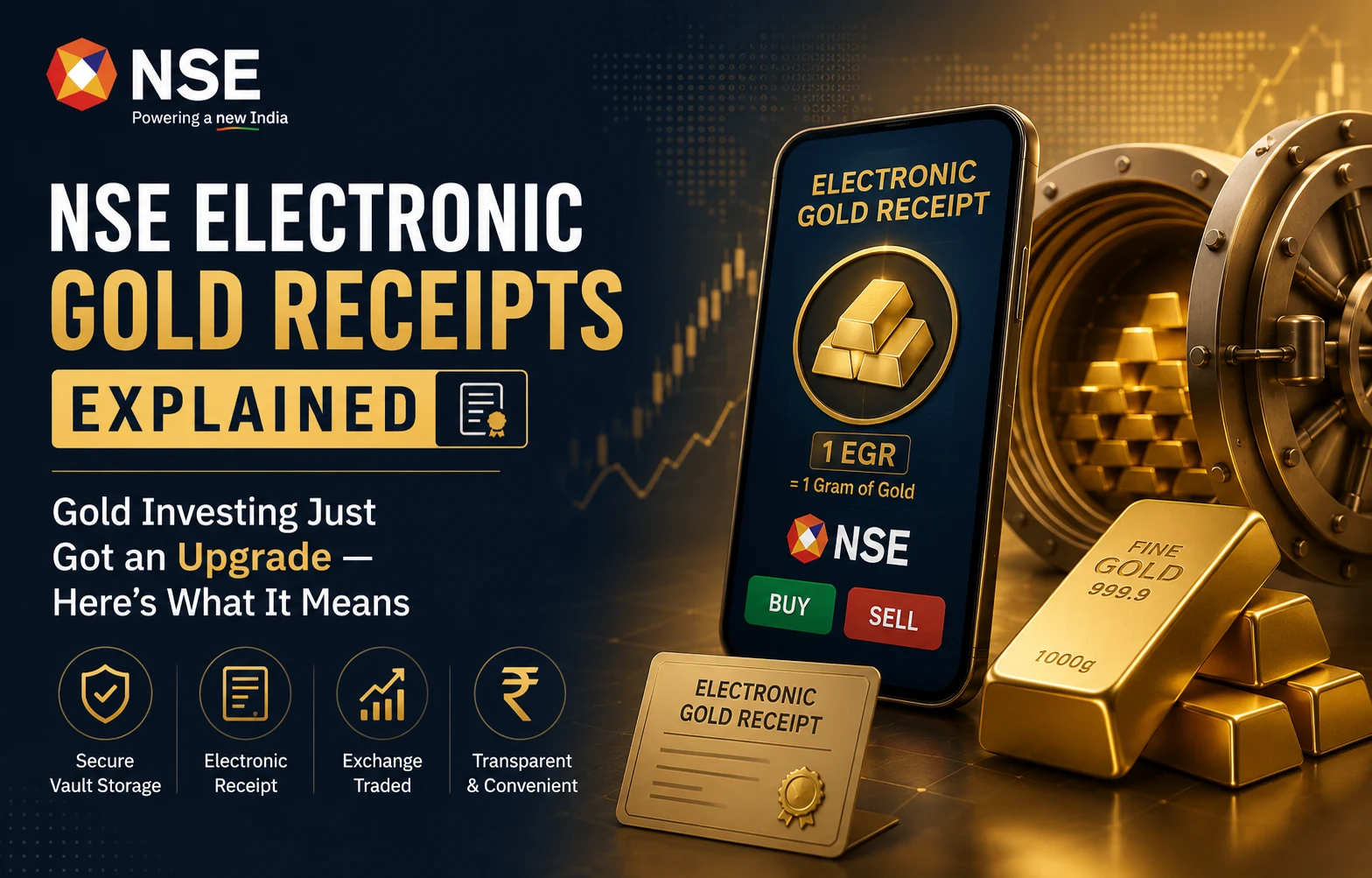
Think of EGRs as a digital version of physical gold. Instead of holding gold yourself, the gold is stored safely in a vault. In return, you get an electronic receipt that proves ownership. That receipt can then be traded on the exchange, much like shares.
According to NSE’s Chief Business Development Officer, the larger goal is to make India’s gold market more transparent and organised.
Right now, gold trading in the country is still highly fragmented. Prices can vary between cities, purity concerns remain common, and investors often depend on local jewellers for trust.
How Do EGRs Work?
The process starts when gold is deposited with an SEBI-approved vault manager.
Gold Verification
The deposited gold is carefully checked for purity, weight, and quality before it is accepted. This step helps create standardisation and reduces disputes around gold authenticity.
Electronic Receipt Issuance
Once the verification process is complete, an Electronic Gold Receipt is issued against the deposited gold. This receipt acts as digital proof of ownership and can be held or traded electronically.
Exchange Trading
Investors can buy or sell these receipts on the exchange platform, much like trading shares. This creates a more organised and transparent way to participate in gold investing.
Why Could EGRs Matter for Investors?
For regular investors, this could make gold investing easier.
No Physical Storage Stress: You do not have to worry about storing physical gold at home or paying for locker space.
Better Price Transparency: Since the trading happens on the exchange, pricing becomes more transparent and standardised.
Lower Extra Costs: There are no jewellery-making charges involved, which often increase the overall purchase cost.
Easier Buying and Selling: Selling jewellery is not always smooth because deductions and purity checks come into the picture. With EGRs, the buying and selling process is expected to be simpler.
Challenges EGRs May Still Face
Even though Electronic Gold Receipts bring a modern approach to gold investing, the system is still at a relatively early stage in India. Like any new financial product, adoption may take time.
That said, EGRs are not replacing traditional gold anytime soon.
Limited Investor Awareness
Most retail investors in India are still unfamiliar with how EGRs work. Since the concept combines physical gold with exchange-based trading, many people may take time to fully understand and trust the system.
Liquidity Could Take Time to Build
For any exchange-traded product to work smoothly, there needs to be active buying and selling in the market. Since EGRs are still relatively new, trading volumes may remain limited initially until more investors start participating.
Dependence on Vault Infrastructure
The entire system depends heavily on authorised vault managers for storage, verification, and handling of physical gold. Any operational gaps or lack of infrastructure expansion could slow down the ecosystem’s growth.
Participation From Jewellers and Institutions Matters
For EGRs to become mainstream, larger participation from jewellers, banks, institutions, and gold market players will be important. Without broader industry involvement, scaling the platform and improving market confidence could become difficult.
Even with these concerns, EGRs are still being viewed as a long-term structural shift rather than a short-term trend. Much will depend on how quickly awareness, trust, and market participation grow over the next few years.
How Are EGRs Different From Gold ETFs and Sovereign Gold Bonds?
While all three options let investors gain exposure to gold without necessarily buying jewellery or coins, they work quite differently in practice.
From ownership structure to liquidity and returns, here’s a quick look at how Electronic Gold Receipts compare with Gold ETFs and Sovereign Gold Bonds.
What This Means for India’s Gold Market
India is one of the world’s largest consumers of gold, but much of the trade still happens in an unorganised way. NSE’s push towards electronic gold trading is part of a larger effort to formalise the market and improve transparency.
According to the exchange’s leadership, the idea is not just about creating another investment product. It is about building a more reliable ecosystem around gold trading, pricing, and storage.