
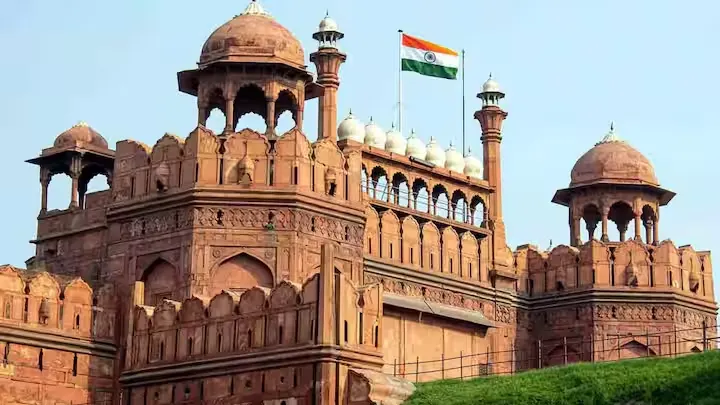
In addition to strangling the lungs of its citizens, Delhi's extreme air pollution has begun to harm the city's historic buildings.
According to research, the red sandstone walls of the Red Fort, where the Indian Prime Minister gives the country's Independence Day speech each year, are developing black crusts because of pollution.
Study Links Red Fort’s Surface Damage to Traffic, Construction & Rain
Researchers collected sandstone and black crust samples from various parts of the Mughal-era Red Fort, including Zafar Mahal.
Their study, “Characterisation of red sandstone and black crust to analyse air pollution impacts on a cultural heritage building: Red Fort, Delhi, India,” revealed that the black crust ranges from thin layers of about 0.05 mm in protected spots to thick deposits of up to 0.5 mm on walls exposed to heavy traffic. These thicker layers are firmly attached to the stone, increasing the risk of flaking and damage to the fort’s detailed carvings.
In addition to heavy metals like lead and zinc, these deposits are composed of gypsum, bassanite, and weddellite. The Delhi construction industry, cement industries, and automobile emissions are the sources of the pollutants. The monument is further harmed by chemical reactions between these contaminants, which erode gypsum layers when it rains.
Red Fort Walls Darkening Due to Air Pollution, Research Shows
The study found that PM2.5 and PM10 particles are key contributors to the fort’s wall blackening, settling over time and causing discoloration. Researchers also noted blistering, salt deposits, dampness-related crumbling near entrances, and infiltration of nitrates and oxalates, which trigger internal stress and biological growth in the sandstone.
Built by Shah Jahan in 1639 and completed in 1648, the Red Fort has been a UNESCO World Heritage site since 2007. The study urges timely conservation measures, suggesting stone protectives or sealants on affected areas to prevent further black crust formation.