
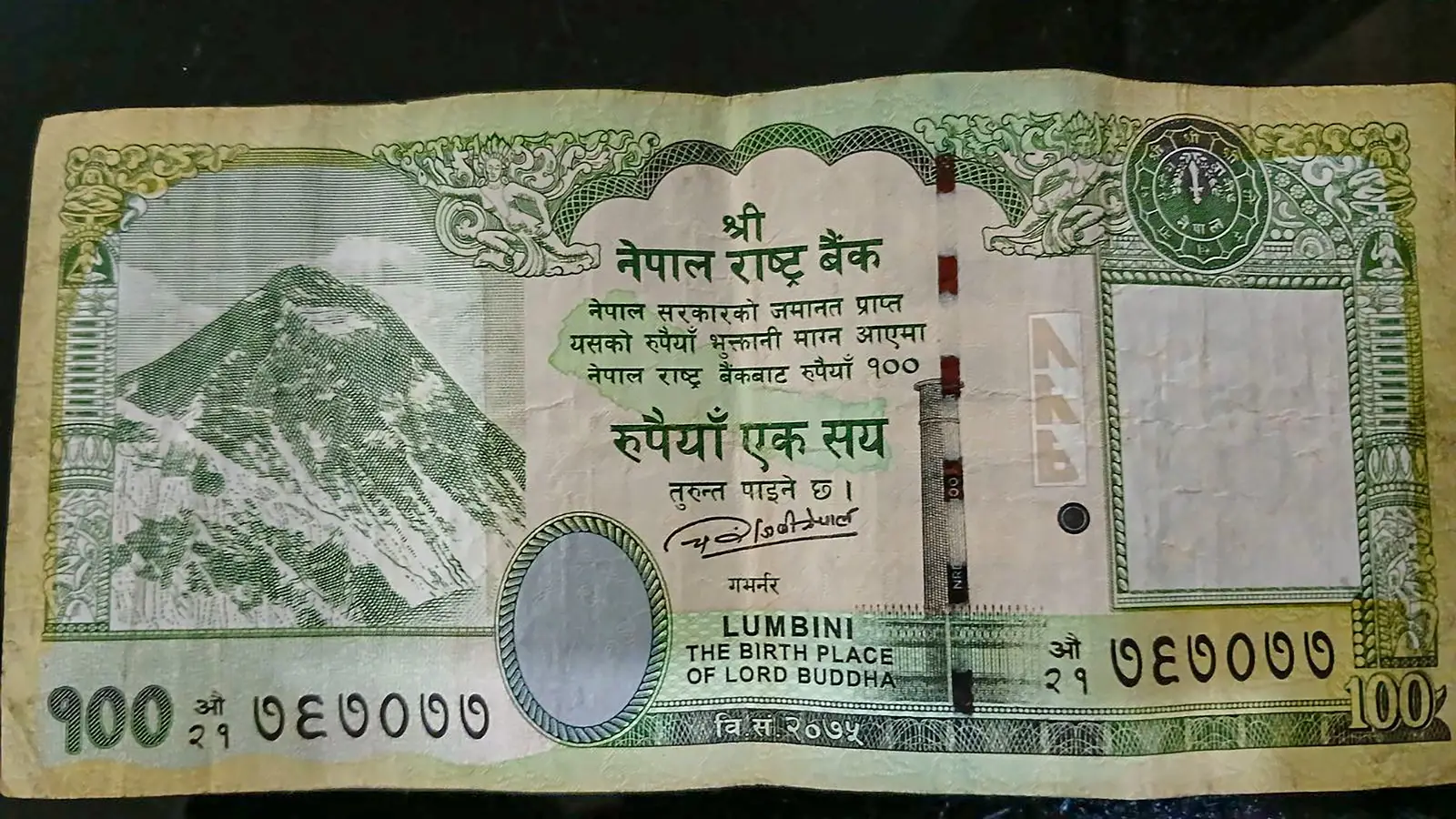
A new ₹100 banknote from Nepal has caused controversy due to the geography it features. The letter depicts contested areas that India claims, sparking a new diplomatic conflict and escalating hostilities between the two neighbors.
What's New?
A new 100 rupee banknote with an updated map of Nepal has been launched by the Nepal Rastra Bank (NRB). The contested regions of Kalapani, Lipulekh, and Limpiyadhura—areas that India currently claims—are shown on this map.
The date "2081 BS" (based on the Nepalese calendar) on the note indicates that it was just issued in 2024.
Additionally, the design keeps well-known national symbols: a picture of a one-horned rhino, the Nepalese national flower as a watermark, and Mount Everest on the left.
Why This Is Important
A country formally asserts its territorial claims when contested territories are included on a currency note, which is more than just symbolic. For Nepal, it supports the 2020 map revision carried out by K. P. Sharma Oli's administration, which first claimed the three areas.
This is seen as a unilateral and inappropriate action by India, which views Kalapani, Lipulekh, and Limpiyadhura as part of its sovereign territory under the treaty-defined line.
India's Reaction
The inclusion of those territories on Nepal's new note has been denounced by the Indian government's Ministry of External Affairs (MEA), which describes it as a "unilateral act" that does not alter the situation on the ground.
Such symbolic claims, particularly those written on currency, run the risk of exacerbating diplomatic tensions if they are not supported by reciprocal communication rather than provocations, experts and analysts caution.
Context: The Reasons Behind It
A new political map that included Kalapani, Lipulekh, and Limpiyadhura was adopted by Nepal in May 2020 through a constitutional amendment.
Nepal's Cabinet apparently accepted the decision to print the new note, and an international printing company was given the printing contract.
Only the 100 rupee note, out of all denominations, has the revised map, according to Nepal's central bank; other notes, such as ₹10, ₹50, ₹500, and so on, have not.
What It Signifies for Relations Between India and Nepal
An already delicate border dispute is made more tense by the note problem. Trade, political ties, and public opinion might all be impacted, particularly in border-state areas.
Both sides are under diplomatic pressure to react: India must determine how strongly to retaliate, while Nepal must defend its conduct. Inflammatory speech could backfire, analysts caution.
Such actions may cause anxiety and concern for residents and visitors close to border regions because symbols are increasingly influencing public opinion in the area.